





Every expense tracked. Every dollar accounted for. Yet financial stress persists.
No late payments. No frivolous purchases. Everything appears under control from the outside. But inside? There’s an unshakable tension—the feeling that a single surprise bill could unravel months of planning.
This anxiety has surged throughout 2026. The issue isn’t that people lack financial knowledge—it’s that the system they’re using was built for a world that no longer exists.
Traditional budgeting promised financial stability. So why is traditional budgeting failing in 2026?
This piece reveals exactly why traditional budgeting is failing in 2026 and what’s emerging to replace it. Not abstract concepts. Not self-blame. Practical frameworks designed for today’s actual financial landscape—validated by experts witnessing this transformation.
Table of Contents
What “Traditional Budgeting” Was Designed For (And Why That World Is Gone)

Traditional budgeting operates on simple mechanics: receive consistent income, allocate it across fixed categories, stay within boundaries.
Housing, food, utilities, savings. Each gets an assigned amount. Remain below the threshold and you’re succeeding. Exceed it and you’ve made an error.
This framework thrived for generations because economic conditions supported it. Paychecks arrived predictably. Cost increases happened gradually. Financial surprises were genuinely uncommon. Monthly planning felt sufficient for maintaining control.
Those conditions have vanished.
“The budgeting structure most people follow emerged from post-WWII economic stability,” observes financial planner Sarah Chen, who has guided over 500 clients through economic shifts. “It presumed single-employer careers, inflation around 2-3% annually, and infrequent emergencies. None of these assumptions hold true anymore.”
Currently, financial transactions occur rapidly. Costs fluctuate frequently. Income flows irregularly. Despite this, countless people cling to a framework designed for predictability in an environment marked by constant flux.
People haven’t changed. The economic landscape has.
Rising Prices Broke the Math Before People Broke the Rules
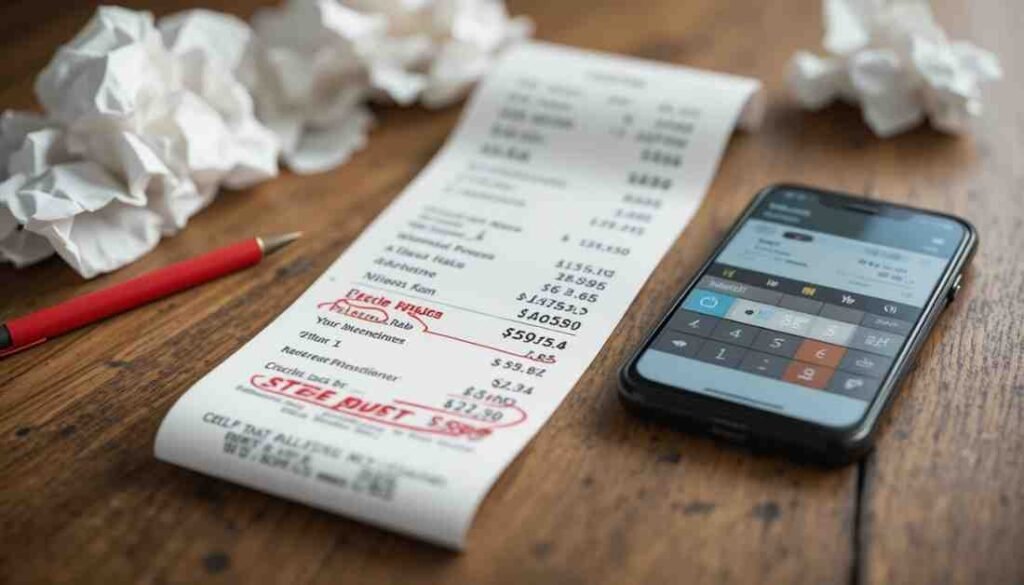
One subtle reason traditional budgeting is failing in 2026? The calculations no longer work.
Food budgets from ninety days ago barely match current receipts. Utility costs swing unpredictably. Housing, insurance, and subscription services creep upward steadily.
Budgets demand consistency. Contemporary pricing delivers volatility.
Economic analysis reveals unprecedented fluctuation in essential household costs since 2023. “We’re witnessing price movements within single months that previously took full years,” explains Dr. Marcus Thompson, a household finance economist. “Grocery expenses might surge 8% one month, decline 3% the next, then climb again. Traditional frameworks cannot adapt to these patterns.”
When necessary spending consistently exceeds allocated amounts, motivation deteriorates. Internal questions multiply: Was I careless? Did my calculations fail? Should restrictions tighhen further?
Reality is more straightforward. Budgets based on previous pricing frequently collapse against current costs. This volatility represents a primary driver of traditional budgeting failing in 2026.
When mathematical foundations repeatedly crumble, even disciplined individuals abandon trust—not from inadequate control, but because the framework no longer mirrors reality.
Expert Tip: “Release the guilt when food costs exceed projections,” recommends financial coach Jennifer Martinez. “Build a 15-20% volatility cushion into essential categories. This isn’t careless planning—it’s reality-based planning.”
Income Is No Longer Predictable, But Budgets Still Assume It Is

Understanding why traditional budgeting is failing in 2026 requires examining modern income patterns. Traditional frameworks presume identical monthly earnings. For vast numbers in 2026, this presumption crumbled.
Independent contractors navigate irregular payments. Platform workers encounter demand fluctuations. Performance-based positions shift with market conditions. Secondary income streams rise and fall unpredictably. Even traditionally salaried positions now involve bonuses, timing gaps, or variable components that disrupt monthly forecasts.
Recent employment data indicates nearly 40% of American workers now experience some income variability through freelancing, gig platforms, or performance compensation.
Monthly frameworks struggle here because they require certainty before expenditure begins.
The actual problem: Everything can be done “correctly” while experiencing months where nothing is technically wrong, yet the budget disintegrates. A delayed payment. A slower week. One expense arriving prematurely.
“I work with six-figure earners who can’t make traditional budgeting function because monthly income varies $3,000-$5,000,” shares certified financial planner David Reynolds. “They perceive themselves as failures, but the tool is failing them.”
Budgets fail not through poor decisions, but because timing outweighs categories.
Budgeting Fatigue Is Real (And It’s Not a Discipline Problem)

Another critical reason traditional budgeting is failing in 2026 relates minimally to money itself. It’s mental exhaustion.
Budgeting demands relentless effort: recording purchases, assigning categories, reconciling figures, fixing errors. Over time, this generates tension cycles. Each transaction becomes a test. Each error feels like personal failure.
Behavioral economists call this decision fatigue. “Average individuals make 35,000 choices daily,” notes Dr. Lisa Patel, a behavioral finance researcher. “When financial frameworks demand 20-30 micro-decisions daily—categorization accuracy, budget status, category adjustments—you’re exhausting mental reserves that could drive genuine financial improvement.”
Most people don’t abandon budgeting from carelessness. They quietly exit because the framework demands perpetual correction.
When systems feel like endless discipline rather than support, trust erodes. Checking stops. Adjustments cease. Complete avoidance develops.
This avoidance isn’t laziness. It’s exhaustion.
Expert Insight: “The optimal financial system is one you’ll actually maintain six months forward,” Martinez emphasizes. “If your budget requires flawless data entry and constant attention, it has already failed—regardless of spreadsheet aesthetics.”
Why Budgeting Apps Didn’t Fix the Problem

Budgeting apps promised to address traditional budgeting failing in 2026 through technological solutions: automated tracking, intelligent categorization, instant updates. They provided partial help, yet core problems persisted for numerous users.
Apps document completed transactions. They don’t stabilize earnings. They don’t smooth pricing volatility. They don’t eliminate surprises.
Actually, increased data can amplify pressure. Observing every fluctuation instantly often escalates stress rather than alleviating it. Additional tracking doesn’t inherently create control.
“Technology amplified the wrong elements,” argues fintech analyst Robert Kim. “Apps simplified seeing budget overages in real-time. They didn’t address fundamental issues: budgets themselves assumed faulty premises about income consistency and price stability.”
Budgeting apps function best as components within larger frameworks. When treated as complete solutions, they frequently amplify traditional budgeting’s identical weaknesses. Inputs remain unstable. Assumptions remain inflexible.
Technology cannot repair frameworks built for vanished eras.
The Deeper Issue: Budgets Assume Control, But Life Is Uncertain
Fundamentally, traditional budgeting rests on one belief: life can be controlled through sufficient precision.
Reality resists precision.
Medical costs materialize unexpectedly. Equipment failures occur at inopportune moments. Family obligations override plans.
One unanticipated expense can invalidate an entire month’s budgeting—not merely financially, but emotionally. Frustration transforms into shame. Shame becomes avoidance. Avoidance destroys habits completely.
“Traditional budgeting treats variation as failure,” Chen observes. “But variation is simply life. When your framework interprets normal life circumstances as personal failures, the framework is problematic.”
When frameworks break sufficiently often, people discontinue use. Not from insufficient care, but because systems penalize them for uncertainty they cannot prevent.
What’s Replacing Traditional Budgeting in 2026

As traditional budgeting loses relevance, emerging systems are quietly substituting it. These approaches share one central principle: flexibility over precision.
Financial professionals industry-wide observe this transformation. “The most controlled clients aren’t those with detailed budgets,” Reynolds notes. “They’re those with flexible frameworks.”
If you’re experiencing traditional budgeting failing in 2026, these contemporary alternatives provide paths forward:
Spending Plans Instead of Spending Limits
Rather than rigid caps, people shift toward spending plans. Plans prioritize significance rather than enforcing strict boundaries. Essentials receive priority. Goals follow. Flexibility occupies remaining space.
Adjustments occur weekly or continuously, not monthly. Plans evolve as circumstances change.
How to implement it: “Begin with non-negotiables—housing, minimum debt obligations, basic food,” Martinez advises. “Allocate funds there first. Everything else becomes priority-based dialogue with yourself, not rigid limits. Ask ‘What matters most this week?’ rather than ‘What does my category permit?'”
Cash-Flow-First Thinking
Contemporary money management emphasizes timing: when funds arrive, when they depart, what requires coverage first.
This approach replaces category fixation with awareness. Buffers matter beyond perfection. Cash flow absorbs volatility substantially better than static budgets ever managed.
“I teach clients weekly thinking, not monthly,” Reynolds explains. “Map your upcoming four weeks of income and expenses. That granularity reveals timing gaps monthly budgets completely miss.”
Expert recommendation: Establish a minimum two-week buffer in checking accounts. This single adjustment eliminates most cash flow anxiety and prevents cascade effects where one delayed payment disrupts everything.
Automation Over Willpower
Another major 2026 shift involves reducing decision-making entirely: automated savings, automated payments, default investments.
Automation eliminates friction. It protects progress during demanding or stressful periods. Willpower proves unreliable. Systems don’t.
Research validates this. Studies demonstrate automated savers accumulate 2-3 times more than manual transferrers, regardless of income levels.
“Automate everything possible,” Dr. Patel urges. “Not from laziness, but intelligence. Every automated decision eliminates one opportunity for decision fatigue to undermine goals.”
Pro tip: Schedule automations for days immediately following typical pay dates. This “priority payment” approach ensures savings occur before spending decisions deplete willpower.
Goal-Based “Money Buckets”

Instead of monthly categories, many now employ goal-based buckets: emergency reserves, annual expenses, near-term priorities, long-term objectives.
These buckets acknowledge expenses don’t occur monthly. They diminish surprise stress by planning for reality rather than averages.
“Auto insurance bills twice yearly. Holiday spending is seasonal. Medical deductibles reset annually,” Chen highlights. “Monthly budgets pretend these surprise us. Bucket systems plan proactively.”
This ranks among the most effective contemporary budgeting alternatives because it aligns with human behavior rather than opposing it.
Implementation guide: Create separate savings buckets (either distinct accounts or digital tracking) for predictable irregular expenses. Divide annual costs by twelve and set aside monthly amounts. When bills arrive, funds already exist—no budget crisis.
What Financial Control Looks Like Now (And Why It Feels Different)
Financial control in 2026 doesn’t resemble perfect spreadsheets. It resembles adaptability.
Fewer rules. Clearer priorities. Reduced tracking. Enhanced awareness.
Control now means adjusting without panic, absorbing change without abandoning frameworks. People using these newer approaches frequently track less yet feel more stable—not from ignoring money, but because frameworks are constructed to survive actual life.

“My most successful clients can articulate their top three financial priorities and roughly where they stand on each,” Reynolds shares. “They can’t specify exact restaurant spending last month—and don’t need to. That’s the transformation: from precision to direction.”
Precision has yielded to resilience.
Key indicators you’re progressing correctly:
- You can absorb a $500 surprise without panic
- You adjust spending naturally when income dips without feeling you’ve “failed”
- You review finances weekly but don’t obsess over individual transactions
- Your system functions during hectic months, not just when hyper-focused
Conclusion: The Problem Was Never You. It Was the System.
Traditional budgeting presumed stability: consistent pricing, reliable income, predictable expenses.
The 2026 reality involves variability and uncertainty. When environments transform, systems must transform too. This represents the fundamental reason behind traditional budgeting failing in 2026.
Modern money frameworks are flexible, automated, and human-centered. They prioritize survival beyond perfection.
If budgeting has felt like perpetual struggle, the issue was never your discipline. It was the framework you were asked to follow. Recognizing that traditional budgeting is failing in 2026 isn’t admitting defeat—it’s the initial step toward discovering what actually functions.
“Stop questioning what you’re doing wrong with budgeting,” Martinez concludes. “Start questioning what your money framework needs to do right for your life. That question’s answer is where genuine financial control exists.”
What if the actual goal isn’t following a budget perfectly, but constructing a system that survives real life?
That question is where improved financial control begins.
Read Also: The Middle-Class Money Trap Nobody Warns You About

