




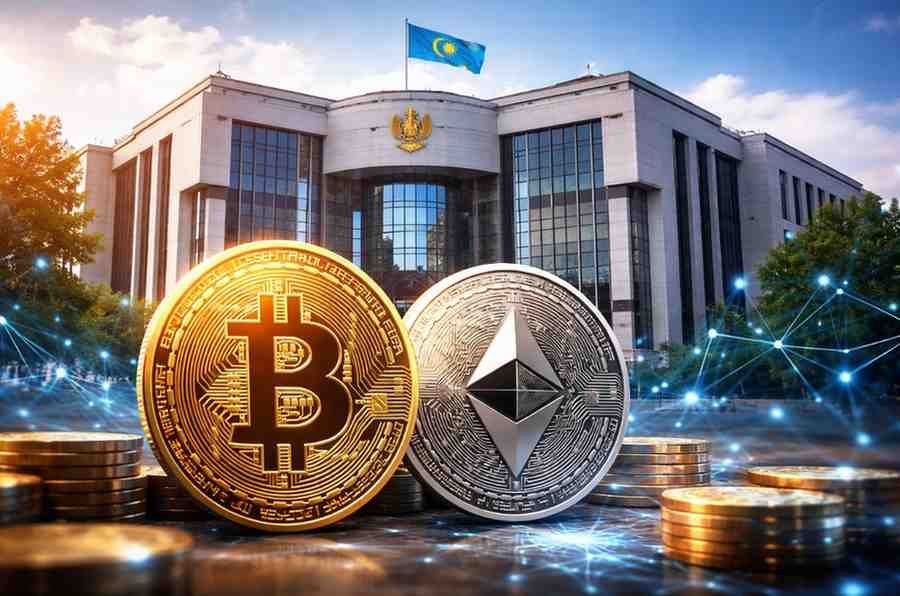
President Kassym-Jomart Tokayev has signed legislation that brings cryptocurrency trading under a formal regulatory regime, giving the central bank authority to license exchanges and decide which tokens can be traded on regulated platforms.
Kazakhstan has taken a decisive step toward formalizing its crypto market after President Kassym-Jomart Tokayev approved a new law that creates a national regulatory framework for digital assets and places the country’s central bank at the center of oversight.
The legislation amends banking and financial market rules to introduce licensing for cryptocurrency exchanges, set standards for the issuance and circulation of digital assets, and establish clear supervisory powers for the National Bank of Kazakhstan.
Central bank gains control over licensed crypto markets
Under the new rules, the National Bank of Kazakhstan will license crypto exchanges, approve which cryptocurrencies are allowed to trade on regulated platforms, and set limits on trading activity to protect investors.
The law introduces a formal classification of digital assets, including stablecoins, assets backed by financial instruments and property, and financial instruments issued in electronic digital form. Cryptocurrencies such as Bitcoin and Ether are defined as “unsecured digital assets” and will be subject to stricter controls.
The Agency for Regulation and Development of the Financial Market, which drafted the legislation, will set the requirements for issuing, circulating and redeeming a new category known as digital financial assets, excluding stablecoins. Operators that issue these assets will need a central bank license and must follow rules similar to traditional financial markets, including risk management, disclosure and investor protection standards.
For the crypto industry, the framework signals a shift from fragmented oversight to a centralized model in which the central bank determines market access and product eligibility. For investors, it introduces a regulated environment with formal protections but also tighter restrictions on which tokens can be traded and how exchanges operate.
Read Also: Your Brain on Social Media: How Algorithms Hack Human Psychology

