





Bhutan has quietly taken a strategic step deeper into blockchain participation by staking 320 ETH, valued at close to $970,000, through institutional staking provider Figment. On-chain data shows that the deposit represents ten full Ethereum validators, marking one of the first clear examples of a sovereign state actively participating in Ethereum’s Proof-of-Stake network. This move aligns with Bhutan’s growing interest in decentralized technologies and signals a broader shift in how nations may interact with public blockchains.
The government’s decision to use Figment is significant. Figment operates one of the industry’s most reliable validator networks, known for uptime, security, and professional-grade performance. By choosing an institutional partner rather than running internal validator hardware, Bhutan reduces technical risks, avoids slashing threats, and ensures operational consistency. For a country exploring blockchain at the infrastructure level, this approach offers a stable foundation.
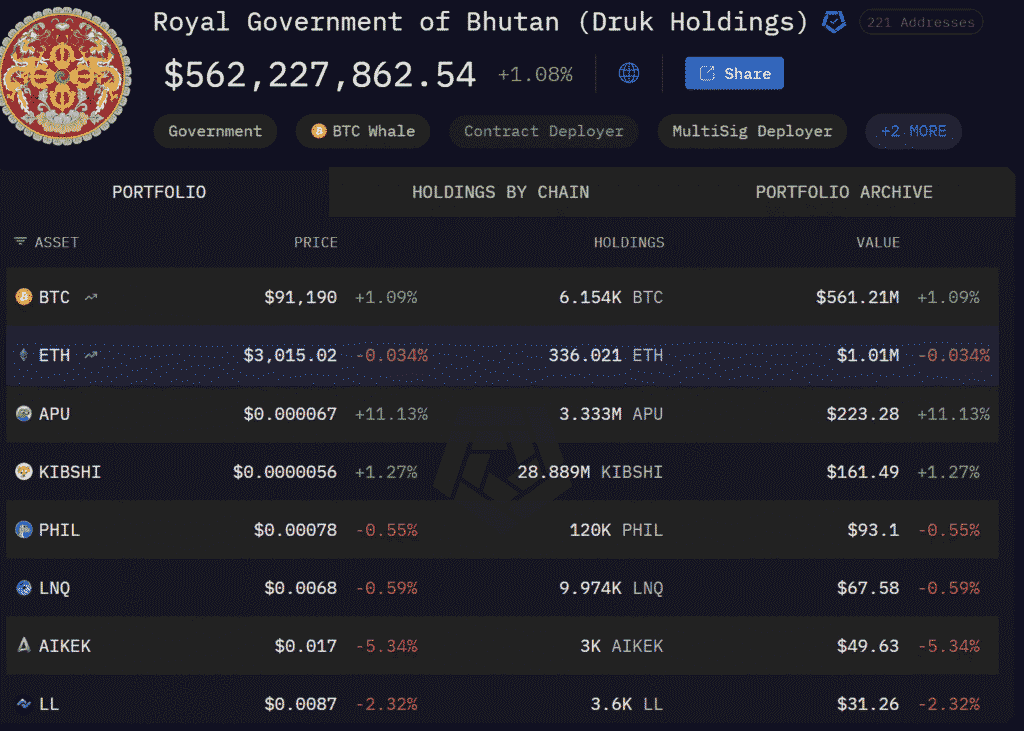
The timing of the stake adds even more meaning. Bhutan has recently been connected to discussions around modernizing its national digital identity system, with reports suggesting that Ethereum may play a role in broader digital governance initiatives. Staking ETH while exploring Ethereum-based applications positions Bhutan not as a passive observer but as a hands-on participant in the ecosystem.
Why This ETH Stake Matters for Ethereum’s Future
Bhutan’s move has implications extending beyond one transaction. The participation of a sovereign entity in staking introduces a new type of confidence in public blockchain networks. When a nation-state secures validators, it adds legitimacy to Ethereum’s role as global digital infrastructure. This is not speculation—it’s direct involvement in network security, resource commitment, and long-term alignment with decentralized technology.
The addition of 320 ETH to Ethereum’s locked supply also has economic effects. Every stake reduces circulating ETH, strengthening scarcity and reinforcing Ethereum’s supply dynamics. For long-term holders and analysts, this is another signal of structural demand. While the amount staked is modest on a global scale, the symbolic value of a country participating in validator operations carries weight.
However, risks remain. Staked ETH is locked and cannot be traded freely, exposing the stake to short-term market volatility. Although Figment validators are considered secure, reliance on external infrastructure introduces a layer of third-party dependence. These are standard considerations in institutional staking, but they become more visible when a government engages in the process.
Bhutan Signals a New Direction for Blockchain Engagement
By staking 320 ETH through Figment, Bhutan has positioned itself among the earliest sovereign adopters directly participating in Ethereum’s technical infrastructure. This move supports the network, aligns with the country’s digital ambitions, and demonstrates how nations may increasingly use decentralized systems not just for investment, but for governance and innovation. It shows that Ethereum’s future may extend beyond private-sector applications into the realm of public digital infrastructure.
Read Also: Do Kwon Seeks 5-Year US Sentence After Terra Crash Fallout

