




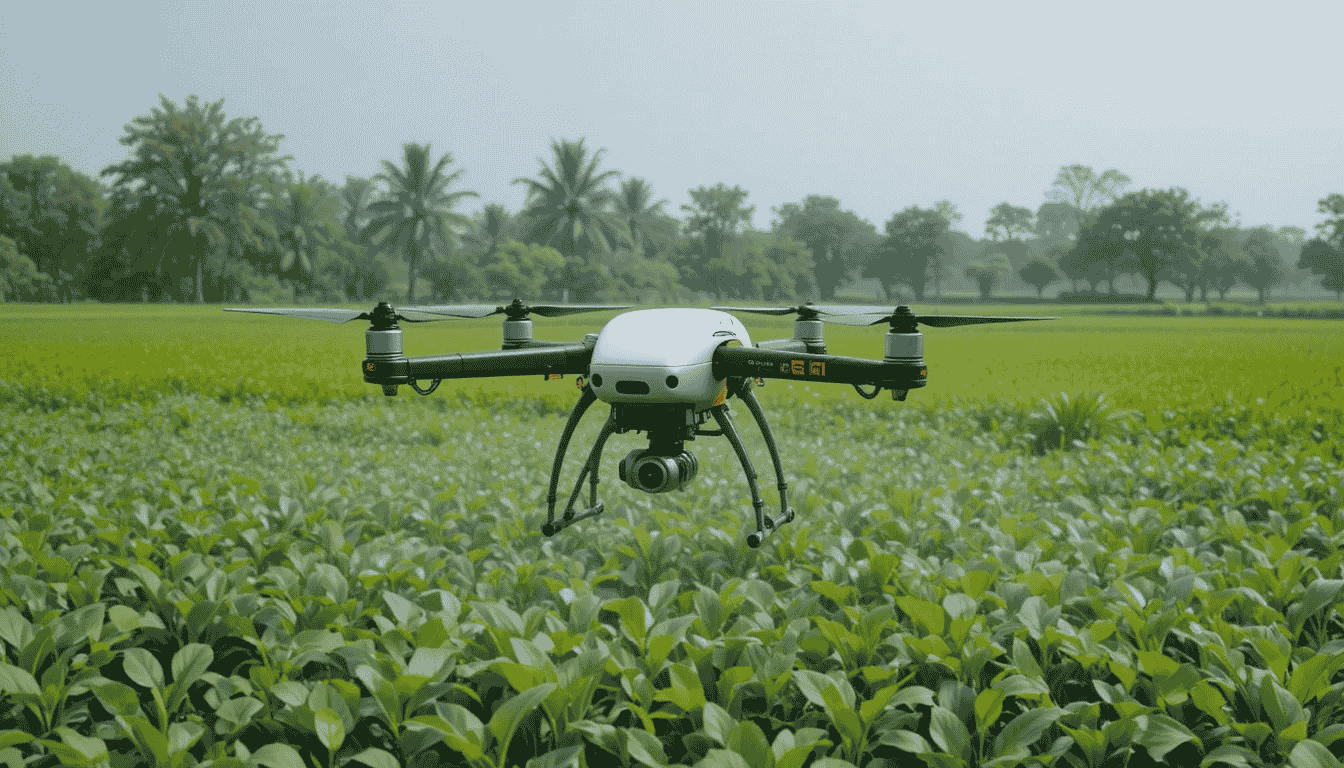
The Indian agricultural sector has long been dependent on traditional tools, manual labor, and unpredictable weather patterns. But in recent years, a wave of tech-driven innovation has begun reshaping this space. Among the most transformative tools entering rural India are drones. Compact, intelligent, and highly adaptable, drones are becoming game-changers for small and large-scale farmers alike. The rise of Indian drones in agriculture is not just about adopting a new gadget—it represents a crucial shift in how food is grown, monitored, and managed in the 21st century.
Why This Matters: India’s Agricultural Challenges
India’s farmers face a mix of old and new problems: fragmented land holdings, declining soil health, labor shortages, and increasingly unpredictable climate events. Traditional spraying methods waste chemicals and water. Crop monitoring is time-consuming and inefficient. Yield prediction remains imprecise. This is where Indian drones agriculture solutions come in—not as a luxury but as a practical necessity.
The government’s push under initiatives like the Sub-Mission on Agricultural Mechanization (SMAM) and Digital India has helped make drones more accessible to farmers. In February 2022, the Ministry of Agriculture even released standard operating procedures (SOPs) for drone use in pesticide application. That means this is no longer future tech—drones are already in Indian fields.
Top Indian Drones in Agriculture: Mini Reviews
Garuda Aerospace Kisan Drone
Garuda Aerospace is one of India’s most talked-about drone startups, backed by cricketer MS Dhoni. Their Kisan Drone is specifically designed for pesticide spraying and crop health analysis. It can cover 30 acres per day, uses GPS for automated navigation, and includes AI-powered imaging to assess crop stress.
Best for: Large farms, agri-businesses, custom hiring centers
Limitations: Higher upfront cost; needs trained operators
Compared to others: More scalable, excellent for precision tasks
Buy: Garuda Kisan Drone Official Store
IoTechWorld Agribot A10
IoTechWorld is one of the first Indian drone companies to receive DGCA certification. The Agribot A10 supports automated spraying, real-time camera feedback, and easy mobile control. It’s been used across Punjab, Haryana, and Maharashtra.
Best for: Government-backed agri pilots, progressive farmers
Limitations: Less AI than premium drones
Compared to others: Reliable with good after-sales support
Buy: Check price on IoTechWorld
Marut Drones AG365
Based in Hyderabad, Marut Drones focuses on sustainability. Their AG365 supports granular spraying (pesticides, fertilizers, micronutrients) with precise droplet size control. It’s also known for soil analysis and yield mapping.
Best for: Eco-conscious, mid-size landholders
Limitations: Limited availability in northern states
Compared to others: Great for integrated agri-tech solutions
Buy: Marut AG365 – Official Website
Premium Comparison Table: Indian Drones for Agriculture
| Brand / Product Name | Key Specs / Highlights | Price Range (₹ approx.) | Best For | Pros | Cons | Buy Link |
|---|---|---|---|---|---|---|
| Garuda Kisan Drone | 30 acres/day, AI imaging, GPS pathing | ₹4–6 lakh | Large farms, agri startups | Scalable, government-backed schemes | Needs training | Buy now |
| IoTechWorld Agribot A10 | DGCA certified, app control, 20 min flight time | ₹3.5–5 lakh | Semi-pro farmers | Simple to use, reliable support | Lacks deep AI integration | Check price |
| Marut AG365 | Eco-spray, soil & yield analysis | ₹3–4.5 lakh | Sustainable farming | Great for data-driven farming | Availability varies | Visit site |
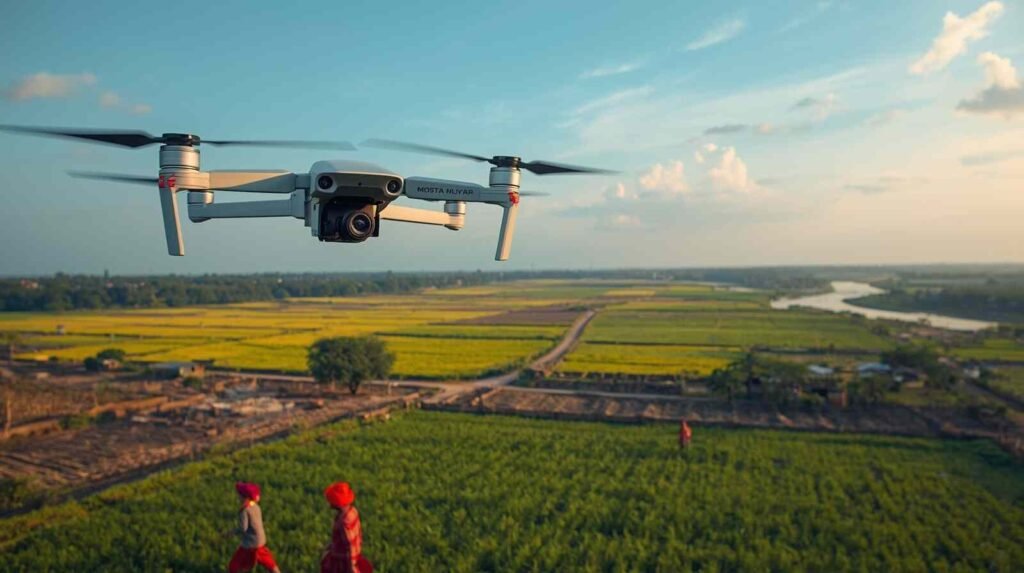
How to Choose the Best Agricultural Drone in India
Buying a drone for your farm isn’t the same as buying a camera drone for fun. You’re investing in an agri-business tool. Here’s what to consider:
1. Area Coverage:
Look for drones that can handle your farm size in fewer trips. If your land is over 10 acres, go for a drone with long battery life and higher payload capacity.
2. Spraying Accuracy:
The drone should have GPS-based route planning and uniform droplet technology. Uneven spraying leads to both chemical waste and lower yield.
3. Training & Support:
Pick a brand that offers training programs or partnerships with Krishi Vigyan Kendras (KVKs). Some even help with government subsidy applications.
4. Government Approvals:
Always check if the drone is DGCA-certified for agricultural use. Unapproved drones can be seized or denied subsidies.
5. Price vs ROI:
Most agri drones cost between ₹3 to ₹6 lakh, but many states offer 40–60% subsidy to FPOs (Farmer Producer Organizations) and Custom Hiring Centres. Calculate how many crops/seasons it will take to recover the cost.
Conclusion: The Rise of Indian Drones Agriculture
Drones are no longer futuristic tools—they’re functional, field-ready machines actively changing how Indian farmers grow food. From spraying pesticides precisely to analyzing crop health and improving yield prediction, Indian drones agriculture is rewriting the playbook for modern farming.
If you manage a mid to large-sized farm and want to reduce labor costs while increasing efficiency, the Garuda Kisan Drone is a solid bet. On the other hand, if you’re a startup or farmer exploring drone-based services, the IoTechWorld A10 is more accessible. For eco-focused growers, Marut AG365 stands out with its sustainability features.
As the market matures and government support grows, expect drones to become as common as tractors in Indian fields—only smarter.
Read Also: How Drones Are Transforming Indian Agriculture

