




The token faces heightened uncertainty this week as macroeconomic data and US legislative developments converge with a bearish technical signal on the charts.
XRP is trading cautiously above the $2 level as investors weigh a growing set of macroeconomic and regulatory signals that could determine its near-term direction. While the token has stabilized after weeks of broader market weakness, a bearish technical formation on the weekly chart has raised concerns about potential downside if upcoming events disappoint.
As of Monday, XRP was changing hands around $2.08, according to market data, marking a decline of roughly 43% from its all-time high. The move lower has tracked the wider sell-off across digital assets as risk appetite has softened amid shifting expectations around interest rates and economic growth.
The latest focus for traders is a dragonfly doji candlestick that has formed on XRP’s weekly chart. In technical analysis, this pattern is often interpreted as a warning sign when it appears after a prolonged decline. It suggests that while buyers attempted to push prices higher during the week, they ultimately failed to maintain control by the close, leaving the market vulnerable to renewed selling pressure.
Inflation data and policy signals in focus
The technical setup is colliding with a dense macroeconomic calendar in the United States. On Tuesday, the Bureau of Labor Statistics is scheduled to release December Consumer Price Index data, a key input for expectations around future monetary policy.
Recent data compiled by TradingEconomics shows headline inflation holding at 2.6% in December, while core inflation eased slightly from 2.7% to 2.6%. Market participants are looking for confirmation that disinflation remains on track, particularly as crude oil prices and mortgage rates have declined in recent months.
A higher-than-expected CPI reading could weigh on risk assets, including cryptocurrencies, by reinforcing the case for tighter financial conditions for longer. In that scenario, assets like XRP that are already trading near key support levels could face intensified selling pressure.
Beyond inflation, attention is also turning to developments in Washington. Later this week, the US Senate is expected to hold a markup session on the proposed CLARITY Act, a bill aimed at defining regulatory responsibilities in the digital asset sector. The legislation seeks to clarify the respective roles of the Securities and Exchange Commission and the Commodity Futures Trading Commission, an issue that has been a persistent source of uncertainty for crypto markets.
For XRP, regulatory clarity carries particular significance given Ripple’s long-running legal disputes with US regulators. While the markup does not guarantee passage of the bill, it represents another step in a broader effort to establish clearer rules for the industry.
Technical levels under scrutiny
From a chart perspective, analysts are watching several levels closely. XRP previously formed a double-top pattern near $3.40, with a neckline around $1.62, which marked its lowest point in April last year. The token has also slipped below both the 50-week and 100-week weighted moving averages, reinforcing the cautious outlook.
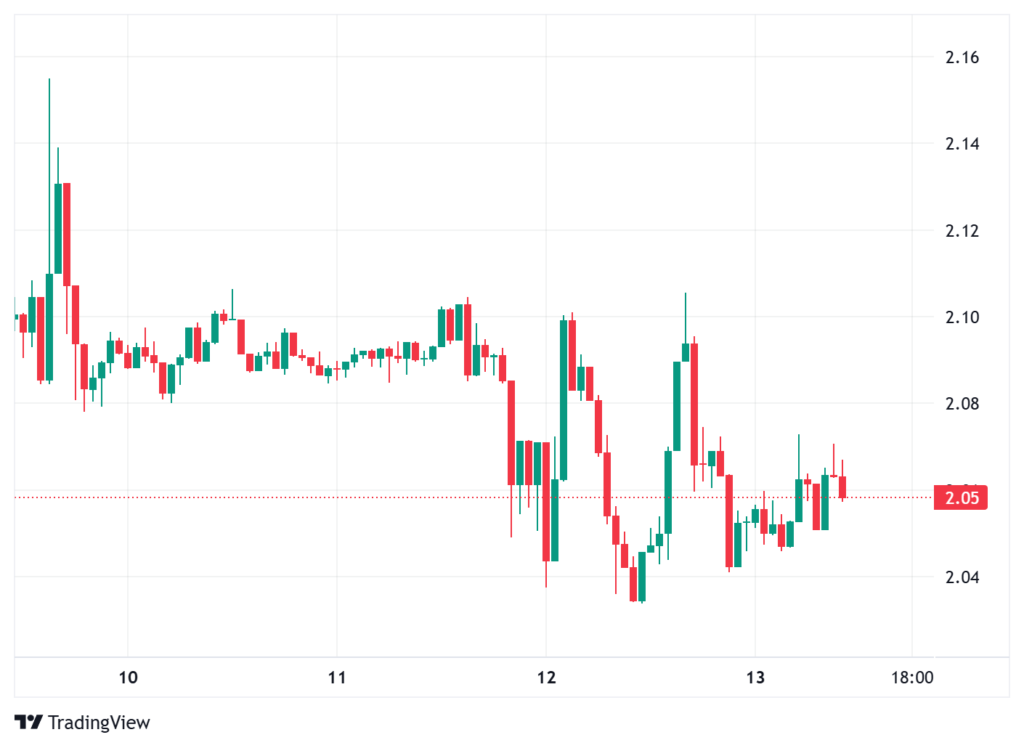
If selling pressure accelerates, the $1.62 area is viewed as the next major support. A sustained move below that level could open the door to further losses, potentially toward $1.50, according to technical projections. Conversely, holding above $2 in the face of macro uncertainty would suggest that buyers are still willing to defend current levels.
Adding another layer to market sentiment is the start of the US earnings season, which begins this week with results from major financial institutions including Goldman Sachs, Bank of America, JPMorgan, and BlackRock. Strong corporate earnings could lift equity markets and support broader risk sentiment, with possible spillover effects into cryptocurrencies.
For now, XRP remains caught between fragile technical signals and a slate of external catalysts. How the token responds to inflation data, regulatory developments, and broader market moves in the days ahead is likely to determine whether the current consolidation turns into a deeper decline or a period of stabilization.
Read Also: What Happens to Your Data When You Stop Using an App?

